The Simple Reason Your Competitors Are Showing Up on Google and You Aren't
GET IN TOUCHBook a Strategy Session
It is one of the most frustrating experiences in modern business ownership. You open a search tab, type in your primary service along with your target city, and watch as your top competitors pop up instantly at the top of the map pack and organic results. You look into your own analytics to figure out how to optimize your presence for better Website Conversions, but when you search for your own business using that same primary phrasing, you are nowhere to be found.
Your digital footprint is buried deep behind pages of outdated directories, generic blog aggregators, and competing sites that you know do not offer the same level of quality or customer care as you do.
When this visibility gap happens, the knee-jerk reaction among most corporate leaders is to assume their competitors are spending tens of thousands of dollars on black-hat hacking tricks, cheating the algorithmic infrastructure, or stuffing their pages with a secret combination of hidden keyword phrases. You might assume you are simply being outspent by an enterprise-level budget. But the real answer is far less mysterious and entirely within your technical control.
Your competitors aren't outsmarting you with complex, hidden tricks. They are showing up because they have built a clean, consistent, and highly structured data ecosystem that modern search engines can easily read, verify, and trust. While your online presence is likely being treated by search models as a collection of fragmented, disjointed links, your competitors have successfully established themselves as a single, recognized entity within the global Knowledge Graph. If you want to steal their visibility, intercept their high-intent leads, and reclaim your rightful market share, you have to stop treating your website like a digital brochure and start treating it like a verified source of machine truth.
The Two Paths To Visibility
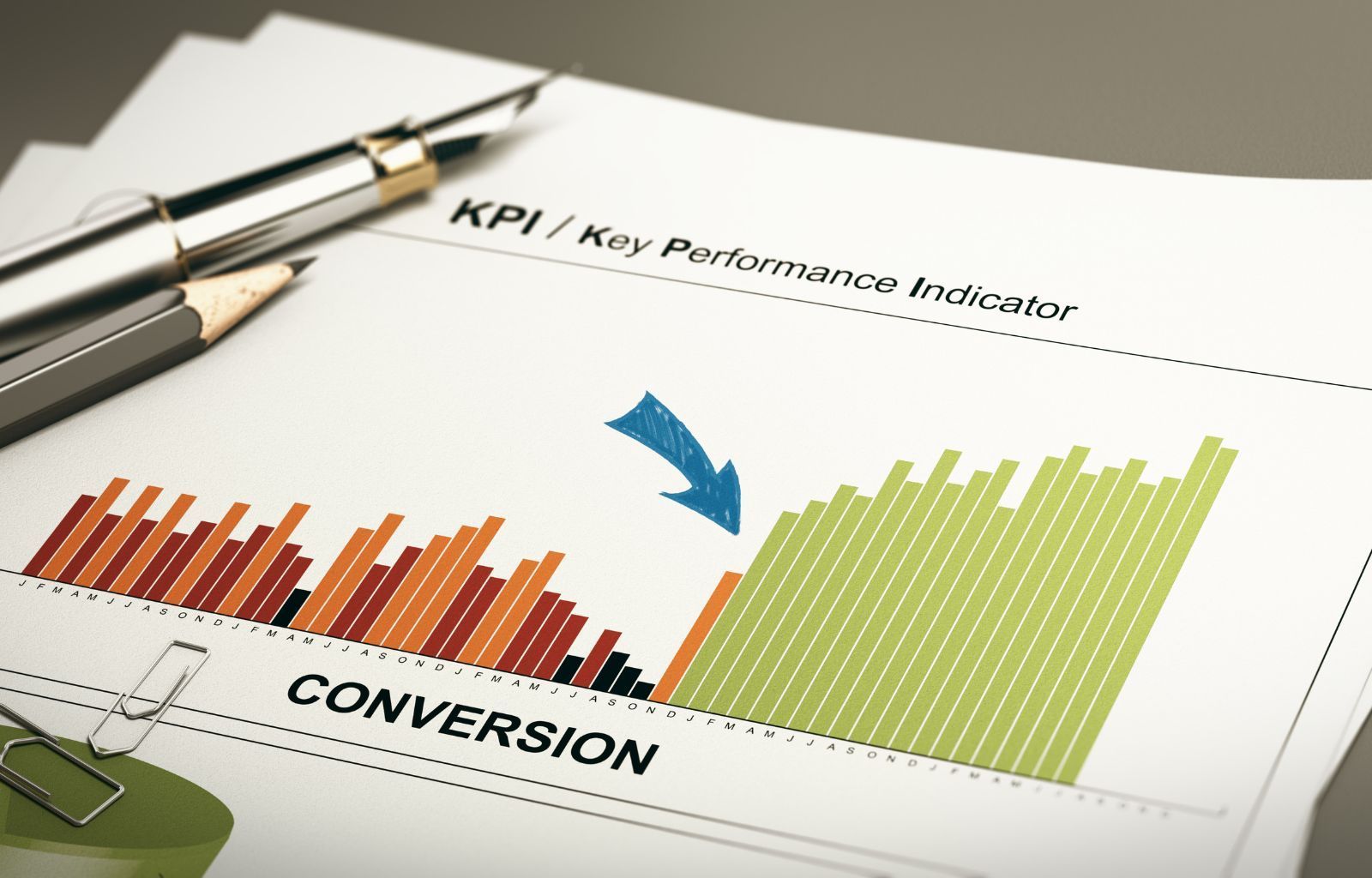
The fundamental difference between a hidden business and a dominant market leader comes down to how modern search engines perceive risk. Automated search algorithms do not guess which business is the best or most qualified in the real world; they calculate reliability based on data harmony across the entire internet.
When a consumer utilizes a search tool or an artificial intelligence assistant to find a local service provider or an enterprise partner, the platform's primary programmatic objective is to deliver a recommendation that is accurate, open, active, and safe. To achieve this, the search software executes an aggressive cross-referencing process, matching your website’s claims against independent, third-party databases.
- The Fragmented Asset: Your primary website claims one address, but your old social media profiles feature an outdated phone number from three years ago. Your state licensing registration uses a variation of your corporate name, while your local map listing points to an old suite number that was never formally updated. To a human, these are simple administrative oversight errors. To a machine, this is a conflicting dataset. The algorithm detects this contradiction as an operational safety risk and systematically suppresses your visibility to protect the search user from a bad experience.
- The Connected Entity: Your competitor's business name, physical location, operational hours, and professional credentials are mathematically identical across every single repository on the internet. There are no dangling modifiers, no conflicting zip codes, and no ambiguous service categories. The machine detects zero risk, validates their legitimacy in microseconds, and confidently displays their business as the definitive answer to the user's inquiry.
The Data Ecosystem
Dominant competitors protect their search real estate by deploying a clean, automated infrastructure. They do not rely on passive, unstructured text paragraphs; they organize their entire online presence into three distinct, interconnected layers of data validation.
The Code Layer
Advanced backend structures (Schema Markup) that translate human copy into machine-readable data strings.
The Core Layer
Deeply synchronized map listings and primary profiles that act as unshakeable, verified entry points.
The Trust Layer
Third-party corroboration from state registries and industry databases that validate your authority.
To bridge the gap between simple traffic and actual customer phone calls, your business data must pass seamlessly through this ecosystem. When done correctly, the transition from basic search visibility to high-intent website conversions becomes entirely automatic:
- Extraction: Search networks and AI scrapers easily pull your operational data, pricing matrices, and service regions into interactive summaries, direct answer snippets, and map packs without needing to guess your intent.
- Validation: The consumer is immediately presented with verified customer feedback, exact operating hours, real-time availability, and direct call buttons right on their screen.
- Action: Because the automated search machine completely vouches for your legitimacy by featuring your data proudly, the buyer experiences zero friction. They contact your team instantly, completely bypassing the traditional comparison funnel and long-winded vetting processes.
The Infrastructure of Machine Trust
To truly understand why your competitors are outranking you, it is necessary to pull back the curtain on how search models ingest data. Many business owners believe that search engines read websites the way humans read websites. They imagine an algorithm scrolling through a home page, admiring the graphics, and reading the text from top to bottom.
In reality, search networks are database managers. They do not read for pleasure; they crawl to categorize. They parse the raw text of your website and attempt to convert it into a structured format.
Why Structured Systems Outperform Creative Design
If your website is built on a standard, out-of-the-box template that lacks technical optimization, the search engine has to work incredibly hard to figure out what you actually do, where you do it, and who you serve. Your competitors, on the other hand, have eliminated all guesswork. By embedding specific structured data directly into their source code, they tell the search engine exactly what they want it to know.
They use code to explicitly pass crucial business attributes to the algorithm:
- Legal identity: Providing their exact legal corporate name registered with the state.
- Geographic parameters: Delivering precise latitude and longitude markers.
- Regulatory status: Displaying active licensing and operational compliance details.
- Service boundary mapping: Specifying the exact target ZIP codes they service.
When an algorithm is forced to choose between a website it has to guess about and a website that provides explicit, structured data, it will choose the structured data every single time. The search engine favors the cleaner data structure, not the better business.
The Hidden Cost of Digital Contradictions
Many corporations treat their online profiles as secondary tasks, delegating them to entry-level internal staff or ignoring them entirely. This creates a slow accumulation of what technical marketers call data rot. Data rot occurs when your business moves locations, changes its primary phone line, alters its corporate structure, or rebrands its services without systematically updating every single reference to that data across the web.
The Algorithm's Diagnostic Trail
Consider the journey of a search algorithm attempting to verify your business. It starts by crawling your main website and noting your address, and then queries several critical external touchpoints:
- Local utility databases and telecom records
- State division of corporations registries
- Historical geographic mapping platforms
- High-volume aggregate directories like Yelp and YellowPages
- Specialized, industry-specific professional registries
If the algorithm finds that your business name is listed as Smith and Sons Plumbing, LLC on your website, but listed as Smith Plumbing on an old directory, and Smith and Sons on your map profile, the machine flags this as an entity resolution failure. The algorithm cannot verify with absolute certainty that these three different names belong to the exact same physical entity. To protect the integrity of its search results, the algorithm minimizes the risk of sending a user to an unverified business by pushing your listing down to page three or four, while elevating a competitor whose data resolves perfectly across every single reference point.

Reprogramming Your Strategy for Conversion
Fixing this issue requires a total paradigm shift in how you evaluate your marketing return on investment. Many traditional agencies will try to sell you on vanity metrics like raw impressions or estimated traffic volume. They will present colorful graphs showing that thousands of people saw your link pop up on a search page. But impressions do not pay the bills, and random traffic does not scale a business. The only metric that matters to your bottom line is your conversion rate, meaning how many of those internet searchers turn into contracted revenue.
How Structure Drives Consumer Action
When you transition from a fragmented, keyword-stuffed web presence to a highly structured entity model, your conversion rates naturally skyrocket. This happens because you are no longer forcing the consumer to do the investigative work.
- Immediate Access: Your phone number, five star reviews, and explicit answers appear inside the AI summary block or top map placement instantly.
- Reduced Friction: Buyers do not need to click through multiple tabs or read paragraphs of fluff to confirm you serve their area.
- Pre-Vetted Trust: Because the search engine features your accurate data layout proudly, the machine has already vouched for your legitimacy before the user clicks.
The customer doesn't need to hunt for your contact form; the search engine has already verified your brand and handed your details to the buyer on a silver platter.
Partnering with Zambuki to Reclaim Your Market Share
Fixing a deeply broken digital footprint and aligning your corporate assets to systematically surpass aggressive competitors is a highly technical, meticulous process. It is not something that can be accomplished by simply writing a few blog posts or changing a couple of titles on your homepage. It requires scrubbing decades of old directory aggregators, resolving structural registry conflicts, and injecting sophisticated schema code directly into your core digital architecture.
That is exactly why we built the competitive visibility ecosystem at Zambuki. At Zambuki, we don't waste your corporate capital on vague theories or temporary marketing trends. We specialize in comprehensive, diagnostic data audits that pinpoint the exact structural reasons why your business is currently being hidden from search results and AI recommendation systems.
Our team handles the heavy technical lifting of entity alignment, registry cleansing, and advanced backend optimization. We clean up your historical data rot, eliminate algorithmic friction, and deploy the precise code frameworks required to position your company as an undeniable, verified industry authority. Stop letting your competitors capture exclusive, high-intent leads just because their data footprint is cleaner than yours. Contact Zambuki today to audit your complete digital presence, close your visibility gaps, and put your organization exactly where it belongs: directly in front of your future customers.

About The Author
Alex Zalamov, Founder of Zambuki
With deep expertise in SEO, local lead generation, and campaign design, Alex launched Zambuki to give service businesses a better way to compete online. After witnessing too many contractors struggle with overpriced retainers, outdated websites, and shared leads, he created a model focused on performance and transparency. Alex personally leads every lead generation campaign and stays involved in each account from your first audit to ongoing campaign refinement. He’s the driving force behind the strategies that boost rankings, increase calls, and convert visitors into loyal customers.
Ready to Move Beyond the Blog?
Reading the news is a great start, but steady growth requires a solid system. If you are ready to stop researching and start winning more customers in your local area, let’s look at your business together and build a plan that works.